The Vanishing Trade: Why Every Technician Counts More Than Ever
With 40% of technicians nearing retirement and few replacements entering the field, the appliance repair workforce crisis is reshaping how businesses must operate to survive.
Sep 15, 2025
The appliance repair industry faces an existential crisis that few outside the trade fully understand—and it's getting worse every year.
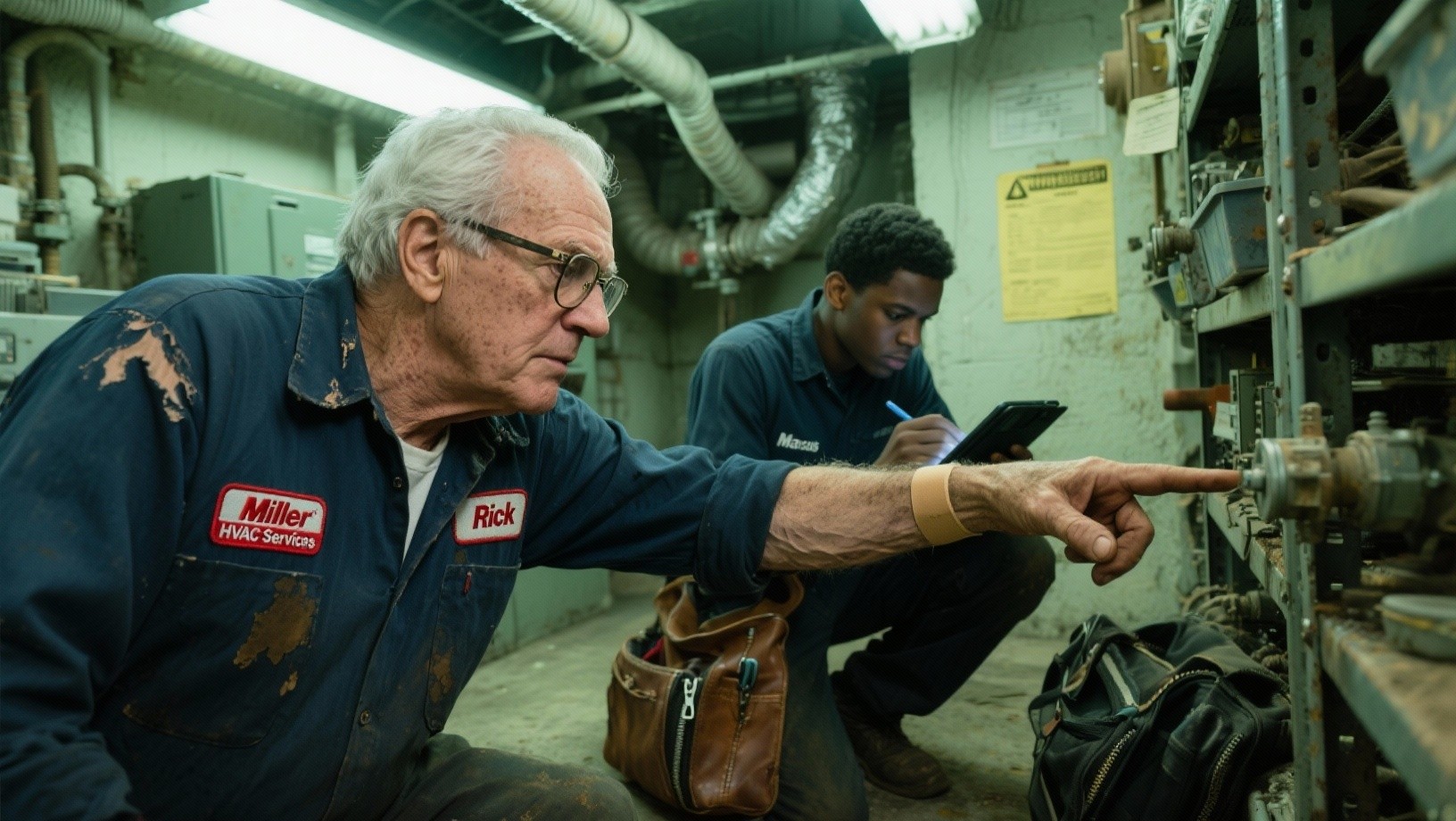
The numbers tell a stark story. Over forty percent of HVAC and appliance repair technicians are now over forty-five years old, approaching retirement within the next decade. Meanwhile, trade school enrollments have declined steadily since 2015, and the few young people entering the field often leave within their first two years. The result is a shrinking workforce trying to serve a growing demand, with no clear solution in sight.
Why Young Workers Aren't Joining:
The perception problem runs deep. For decades, American culture has pushed college education as the only path to success, stigmatizing trades as fallback careers rather than skilled professions. High school guidance counselors rarely mention trade careers, parents discourage their children from pursuing them, and media representation consistently portrays technicians as uneducated labor rather than the sophisticated problem-solvers they actually are.
The economic reality doesn't help. Entry-level technicians face years of low pay while learning the craft, often starting at fifteen to eighteen dollars per hour while carrying student debt from technical programs. The apprenticeship model that once sustained the industry has largely collapsed, leaving new technicians to struggle without adequate mentorship or support.
The Training Crisis:
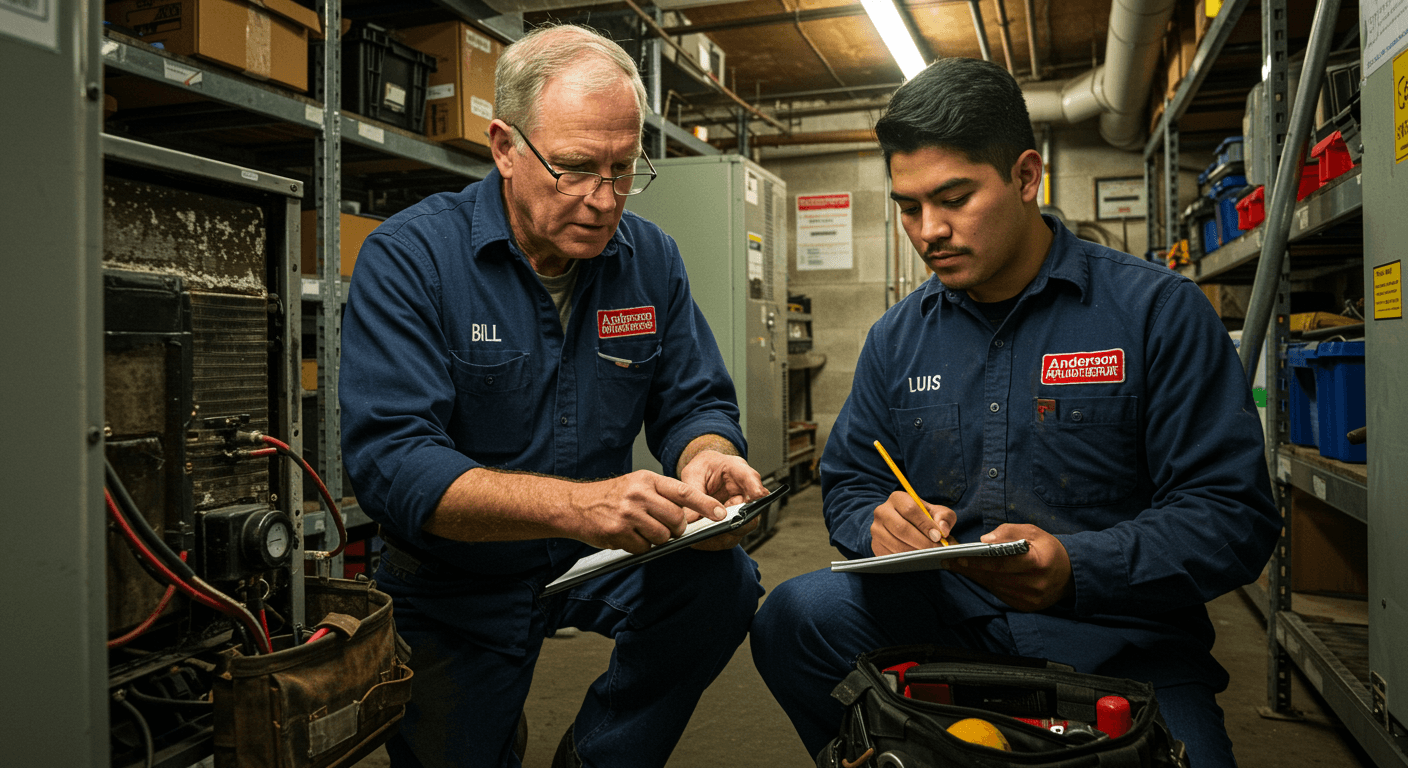
Even when businesses find willing candidates, training them has become exponentially harder. Modern appliances are sophisticated systems combining mechanical, electrical, and digital components. A technician who learned their trade twenty years ago could diagnose most problems through experience and intuition. Today's technician needs to understand IoT protocols, troubleshoot cloud connectivity, interpret sensor data, and navigate proprietary diagnostic systems—all while still mastering the fundamental mechanical skills.
The knowledge gap between retiring veterans and new hires has never been wider. When a master technician with thirty years of experience retires, they take thousands of hours of accumulated wisdom with them. That institutional knowledge—the subtle signs that indicate specific failures, the shortcuts that save hours on complex jobs, the understanding of how different systems interact—vanishes overnight.
Business Impact:
For repair businesses, the workforce crisis creates impossible choices. Service companies report turning away work because they lack technicians to handle the volume. Wait times for appointments stretch from days to weeks, driving frustrated customers toward replacement rather than repair. The few experienced technicians still working command premium wages and can choose their employers, making retention as critical as recruitment.
Small businesses suffer most acutely. Without the resources to offer competitive wages, benefits, and training programs, they lose talented technicians to larger competitors or watch them leave the industry entirely. The result is market consolidation, with smaller operators either closing or selling to larger players, reducing competition and service quality.
Technology as Workforce Multiplier:
The mathematics are unforgiving: if you cannot increase the number of technicians, you must increase the productivity of existing ones. This is where technology transforms from nice-to-have to business-critical. Tools that enable technicians to diagnose faster, reduce callbacks, and handle more complex repairs effectively multiply workforce capacity without adding headcount.
AI-powered diagnostic assistance doesn't replace technician expertise—it distributes it. When a junior technician can access the accumulated knowledge of thousands of repairs instantly, they become productive years faster than traditional training allows. When senior technicians can cut diagnostic time in half through intelligent guidance, they can serve more customers without working longer hours.
The Long-Term Outlook:
The workforce crisis will not resolve itself. Demographic trends suggest the shortage will intensify over the next decade as retirement accelerations while new entry remains flat. Businesses that survive will be those that maximize productivity from limited labor through better tools, more efficient processes, and technology that amplifies human expertise rather than attempting to replace it.
The industry needs a dual approach: cultural campaigns to rebuild respect for skilled trades and immediate technological solutions to bridge the capability gap. Both are necessary. Neither alone is sufficient. But while cultural change takes generations, technology can deliver workforce multiplication today.
Conclusion:
Every technician now matters more than they ever have. The industry cannot afford to waste their time on administrative work, inefficient diagnostics, or preventable callbacks. Tools that make existing technicians faster and more effective are no longer competitive advantages—they are survival necessities in a market with permanently constrained labor supply.
